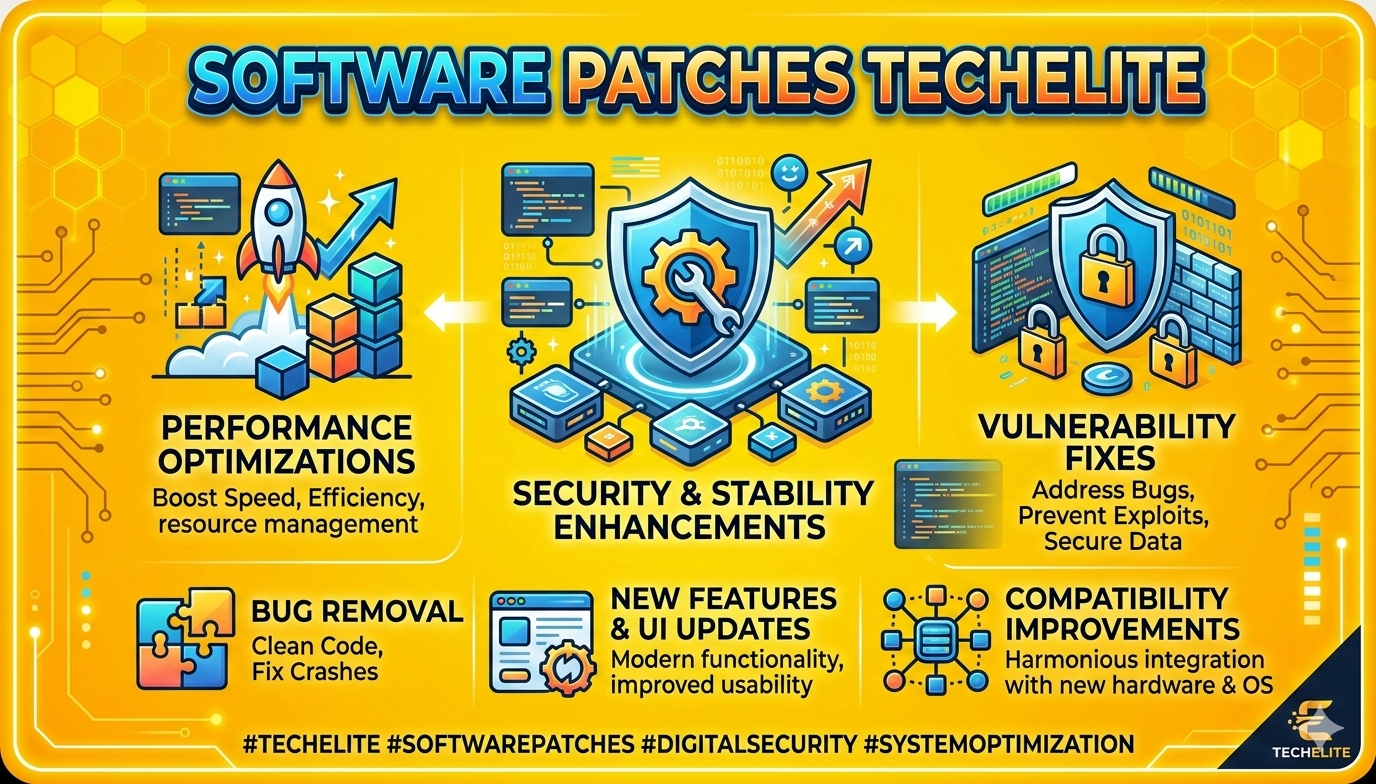
software patches techoelite, In today’s digital ecosystem, organizations rely heavily on stable, secure, and high-performing software systems to maintain competitiveness and customer trust. From small startups to multinational enterprises, uninterrupted system functionality is no longer optional—it is a necessity. One of the most critical components in maintaining this stability is the timely implementation of updates and fixes. Within this landscape, software patches techoelite has emerged as a concept representing structured, proactive, and performance-driven patch management strategies. Rather than treating updates as occasional technical chores, modern businesses now recognize patching as a central pillar of cybersecurity, compliance, and operational excellence.
Understanding the Role of Software Patching
Software patching refers to the process of updating applications, operating systems, or firmware to correct vulnerabilities, fix bugs, and improve performance. In earlier decades, patches were often reactive responses to discovered problems. Today, patch management is strategic and continuous. The philosophy behind software patches techoelite emphasizes not only quick fixes but also predictive maintenance and long-term stability planning.
Patches may address security loopholes, enhance compatibility with new hardware, or introduce minor functionality improvements. In complex IT environments, failing to apply patches can lead to cascading system failures or serious data breaches. Therefore, organizations that adopt disciplined patch cycles reduce risks significantly and improve overall system resilience.
Cybersecurity and Risk Mitigation
Cyber threats evolve rapidly. Hackers actively scan systems for known vulnerabilities, often exploiting outdated software within hours of public disclosure. When patches are delayed, businesses leave themselves exposed. The approach embedded in software patches techoelite highlights rapid vulnerability assessment and immediate remediation to prevent exploitation.
High-profile data breaches often stem from unpatched systems. A single overlooked update can compromise millions of user records, damage brand reputation, and result in financial penalties. Organizations that prioritize structured patch management integrate automated monitoring tools, vulnerability scanning systems, and incident response protocols. By doing so, they minimize attack surfaces and maintain customer confidence.
Moreover, governments and regulatory bodies enforce strict compliance standards that require regular updates. In industries such as healthcare, finance, and defense, patch management is not optional—it is mandated by law. Proactive patching practices ensure compliance while protecting sensitive data.
Operational Efficiency and Performance Optimization
Beyond security, patches play a significant role in improving system performance. Developers continuously refine code to eliminate inefficiencies and improve resource usage. The philosophy behind software patches techoelite incorporates performance monitoring alongside security updates, ensuring systems run smoothly even under heavy workloads.
Performance patches can reduce server load, optimize memory usage, and fix glitches that disrupt workflow. For example, an e-commerce platform experiencing slow checkout times might resolve the issue through a targeted patch rather than a complete system overhaul. This approach saves both time and money while improving user experience.
When organizations treat patch management as part of strategic IT planning, they avoid downtime and maintain consistent productivity. Automated scheduling allows updates to occur during non-peak hours, minimizing disruptions for employees and customers alike.
Structured Patch Management Frameworks
Effective patch management requires more than simply installing updates as they become available. It demands a structured framework that includes assessment, testing, deployment, and verification. The methodology aligned with software patches techoelite involves creating a standardized workflow to evaluate each update before implementation.
First, IT teams assess the relevance and urgency of a patch. Next, they test it in a controlled environment to ensure compatibility with existing systems. Once validated, the patch is deployed in phases to reduce risk. Finally, teams monitor system performance post-deployment to confirm stability.
This structured approach prevents unexpected system conflicts and ensures smooth integration. It also creates documentation trails that help organizations demonstrate compliance during audits. techoelite smart homes
Automation in Patch Deployment
Manual patch management is time-consuming and prone to human error. As systems grow more complex, automation becomes essential. Automated patch management tools scan systems, identify missing updates, and deploy patches according to predefined policies. The strategic model of software patches techoelite strongly supports automation to enhance speed and accuracy.
Automation reduces the risk of overlooked vulnerabilities and ensures consistency across devices. Whether managing hundreds or thousands of endpoints, automated systems maintain uniform security standards. They also generate real-time reports that provide visibility into system health and patch status.
By integrating automation into IT infrastructure, businesses reduce administrative overhead and allow IT professionals to focus on higher-level innovation rather than routine maintenance tasks.
Challenges in Patch Management
Despite its importance, patch management presents several challenges. Compatibility issues, legacy systems, and resource constraints can complicate deployment. Organizations sometimes delay updates out of fear that patches may disrupt mission-critical operations. The framework inspired by software patches techoelite addresses these concerns by promoting thorough testing and risk assessment before rollout.
Legacy systems pose particular difficulties because vendors may no longer support them. In such cases, businesses must decide whether to invest in upgrades or implement compensating security controls. Budget limitations can also delay patch cycles, increasing vulnerability windows.
Another challenge lies in managing remote or distributed workforces. With employees accessing systems from various locations and devices, centralized patch deployment becomes more complex. However, cloud-based management tools now provide scalable solutions that address these concerns effectively.
Cloud Environments and Modern Infrastructure
Cloud computing has transformed how organizations manage software. In cloud environments, providers often handle infrastructure-level patches, while clients remain responsible for application-level updates. The concept of software patches techoelite extends into hybrid and multi-cloud ecosystems, where coordination between vendors and internal teams becomes crucial.
Cloud-native applications frequently rely on containerization and microservices. Each component may require independent patching, increasing operational complexity. Continuous integration and continuous deployment pipelines help streamline updates without interrupting services.
By aligning patch strategies with cloud architecture, businesses maintain agility while safeguarding digital assets. Effective communication between cloud providers and internal IT teams ensures responsibilities are clearly defined.
Global Compliance and Regulatory Standards
Regulatory requirements vary across regions, but nearly all emphasize cybersecurity and data protection. In the United States, for example, frameworks such as industry-specific compliance standards require regular system updates to prevent data breaches. Organizations that adopt disciplined strategies similar to software patches techoelite demonstrate accountability and reduce legal exposure.
Audit readiness is another critical benefit. When patch management processes are documented and automated, generating compliance reports becomes straightforward. This transparency strengthens relationships with stakeholders, partners, and customers.
Failure to comply with patch-related regulations can result in fines, lawsuits, and reputational harm. Therefore, aligning patch management with global standards is both a defensive and strategic move.
The Human Factor in Patch Management
Technology alone cannot guarantee effective patch management. Skilled IT professionals are essential for evaluating risks, testing updates, and responding to emerging threats. Training and awareness programs ensure teams understand the significance of timely patching. The principles associated with software patches techoelite emphasize collaboration between security analysts, developers, and operations teams.
Cross-departmental communication improves deployment efficiency. When IT teams coordinate with business units, they schedule updates to minimize workflow disruptions. Clear communication also prevents resistance from employees who may be concerned about downtime.
Investing in employee education strengthens organizational resilience. When staff recognize the importance of updates, they are less likely to postpone installations or ignore security alerts.
Future Trends in Patch Management
The future of patch management lies in predictive analytics and artificial intelligence. Advanced systems can analyze vulnerability patterns and forecast potential threats before they materialize. This proactive stance aligns closely with the philosophy behind software patches techoelite, which prioritizes anticipation over reaction.
Machine learning algorithms can evaluate risk levels and recommend optimal deployment schedules. Integration with threat intelligence platforms allows organizations to respond to global cyber trends in real time. Additionally, zero-trust architectures demand continuous verification and rapid patch application to maintain integrity.
As technology evolves, patch management will become even more automated, intelligent, and strategic. Organizations that adapt early will gain competitive advantages through enhanced security and operational reliability.
Building a Resilient Patch Management Strategy
Developing a comprehensive patch management strategy requires commitment from leadership and alignment with business objectives. It begins with establishing clear policies that define responsibilities, timelines, and escalation procedures. Incorporating principles similar to software patches techoelite ensures updates are treated as strategic priorities rather than afterthoughts.
Regular vulnerability assessments identify weaknesses before attackers exploit them. Risk-based prioritization ensures critical patches receive immediate attention. Documentation and reporting provide transparency and accountability.
Furthermore, organizations should conduct periodic reviews of their patch management processes. Continuous improvement keeps strategies aligned with emerging technologies and evolving threats. By investing in structured frameworks, automation, and skilled personnel, businesses create resilient IT environments capable of withstanding cyber challenges.
Conclusion
In a world where digital systems power nearly every aspect of commerce and communication, maintaining software integrity is fundamental. Patch management is not merely a technical task; it is a strategic function that protects data, preserves trust, and ensures operational continuity. The philosophy embodied in software patches techoelite underscores the importance of proactive planning, automation, and structured deployment.
Organizations that embrace disciplined patch management reduce vulnerabilities, enhance performance, and strengthen compliance. As cyber threats grow more sophisticated, the need for intelligent and agile update strategies becomes even more critical. By treating patching as a continuous and strategic process, businesses position themselves for sustainable growth, resilience, and long-term success in the digital age.